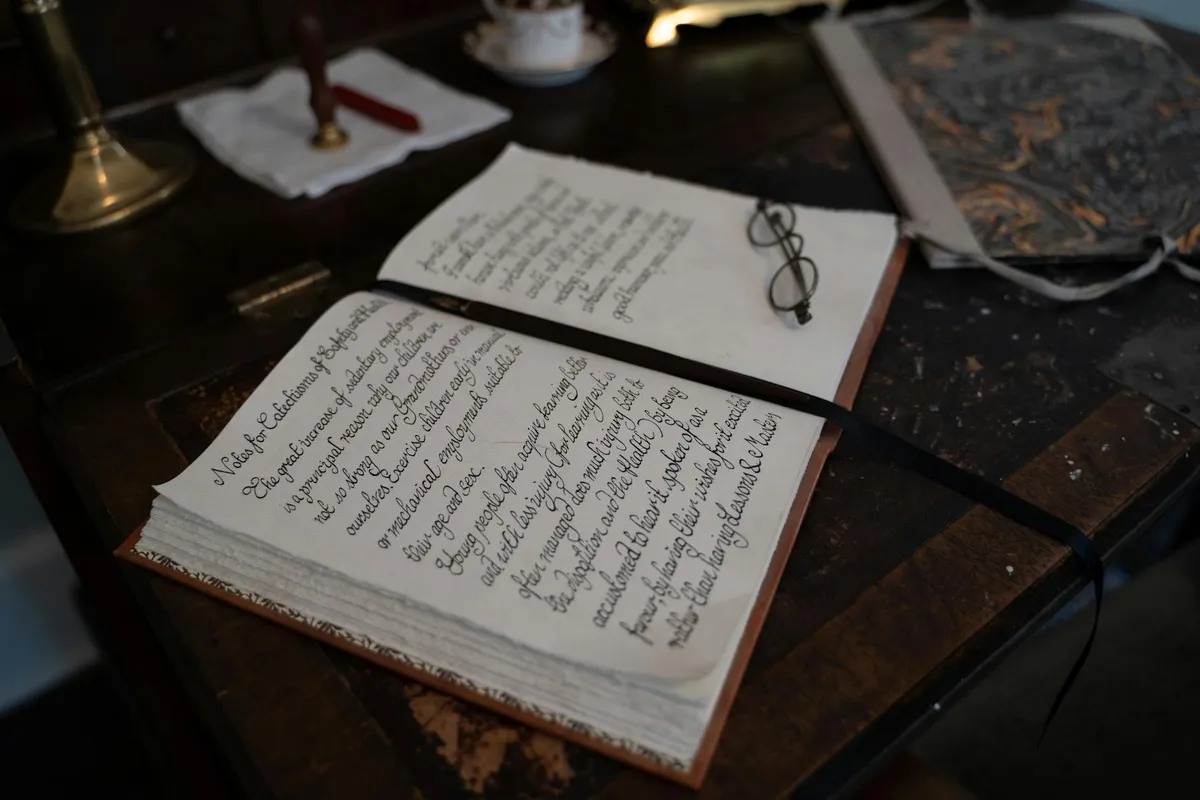
The comparison between Sally Rooney and Henry James has become, over the past five years, something close to a standard reference in the broadsheet criticism, recurring in pieces written from quite different positions and with quite different conclusions. Anne Enright invoked it; James Wood invoked it with characteristic qualifications; the comparison has shown up in three or four of the longer profile pieces in the American venues. The Jamesian frame has done work in placing Rooney within a particular lineage — moral consciousness, drawing-room scrutiny, the analysis of how people read each other across the small pressures of social life — and the placement has not been wholly wrong.
What I want to do in this piece is read the comparison more carefully than the standard invocation does, and to ask, specifically, what the Rooney novels owe to James and what they emphatically do not. The exercise is worth doing because the comparison, when it is asserted without qualification, mis-locates the Rooney books in ways that obscure both their actual achievement and the actual nature of their formal innovations. The Rooney novels are doing several things that James would have recognised. They are also, importantly, doing several things that James would have found foreign to his project, and that the comparison tends to elide.
What James actually does
It is worth being precise, before extending the comparison, about what James's novelistic project actually is. The mature James — the late style James of The Wings of the Dove, The Ambassadors, The Golden Bowl — is centrally concerned with the slow registration of moral consciousness against the small pressures of social situation. The protagonists are typically characters of considerable inwardness, and the narration follows the inward registration with extraordinary patience, often dilating across many pages a single perceptual moment that another novelist might dispatch in a sentence.
The Jamesian sentence, which is what most readers actually mean when they invoke James, accomplishes this inwardness through specific syntactic strategies. The long, repeatedly subordinated clause; the gerundive construction that holds an action in suspense; the parenthetical insertion that introduces a second consciousness scrutinising the first; the dilatory adjective that defers the predicate. These are not stylistic flourishes. They are the sentence-level apparatus through which the Jamesian inwardness is produced. To read James seriously is to read the syntax, and the syntax is the philosophy.
The Jamesian dialogue, similarly, is not naturalistic in the way that contemporary literary fiction is generally naturalistic. The characters say things that are formally heightened, often elliptical to the point of opacity, and the reader is asked to follow not just what is said but what is being implied within the saying — the silent argument that is the actual content of the conversation. The dialogues in the late James novels are more demanding than most contemporary readers expect, and the demand is part of the point.
What Rooney actually does
Now consider the Rooney novel — Conversations with Friends, Normal People, Beautiful World, Where Are You. The surface gesture is similar. The novels are concerned with the registration of consciousness against social pressure. The protagonists are inward in a recognisable sense; they read each other carefully; the social situation is dilated, and the reader is asked to follow the small pressures across page after page of attentive narration. The thematic similarity is real and is what justifies the comparison at the broadest level.
But the sentence-level apparatus is, importantly, different. The Rooney sentence is short. It is direct. It is shorn, deliberately, of the subordinated clause structure that does the work in James. The dilatation in Rooney is achieved not through the elaboration of the sentence but through the accumulation of brief sentences across the paragraph, with the consciousness being built up by reiteration and small-scale variation rather than by the slow unfolding of a single complex predicate. This is a quite specifically modernist or post-modernist sentence pattern, with closer affinities to Cusk or to certain mid-period Didion than to anything in James.
The Rooney dialogue, similarly, is naturalistic in a way that the Jamesian dialogue is not. The characters say things that are recognisably the things that the demographic in question would say; the speech is unmarked by any of the formal heightening that James worked through. The implicit content — the silent argument inside the conversation — is conveyed not through the construction of the speech itself but through the surrounding narration, which performs the kind of inward scrutiny that James would have placed inside the dialogue. The labour-distribution is different.
Where the comparison gets interesting
Where the Rooney-James comparison becomes interesting, then, is not at the level of sentence or technique, where the two writers are doing rather different things, but at the level of the underlying novelistic project. Rooney has revived, for a contemporary readership, a project that had largely been abandoned in the literary fiction of the 1990s and 2000s: the project of treating the small pressures of social and erotic life as the legitimate matter for serious novelistic attention. The James affinity is at this level real. The novelistic ambition — to produce a serious, sustained registration of consciousness across small social events — is the Jamesian ambition, even though the techniques deployed to achieve it are quite different.
This is a more useful version of the comparison because it locates what Rooney has actually done in the contemporary literary landscape. The dominant modes of 1990s and 2000s literary fiction in English — the systems novel, the immigrant epic, the historical reconstruction, the autofictional self-examination — had moved attention away from the small social register and toward larger narrative or thematic structures. The Rooney novels rejected this in a quietly defiant way, returning attention to the conversation, the meal, the bedroom, the long telephone exchange, and treating these as the proper matter for the novel's scrutiny. The Jamesian inheritance is the inheritance of that project, not of the late-Jamesian sentence.
The technique deployed is a contemporary technique. The minimalist sentence, the unmarked dialogue, the inward scrutiny held in the third-person narration rather than embedded in the speech — these are all features of a particular post-1990s prose register that one can find across contemporary literary fiction in English. Rooney has used these techniques with considerable skill, but the techniques themselves are not James's. To say that Rooney writes like James is to obscure what is actually distinctive in her work, which is the application of a contemporary minimalist register to a project of Jamesian ambition. The combination is, in fact, the achievement.
What the elision costs
The standard invocation of James in the Rooney criticism has, I think, costs that the criticism itself has not adequately examined. The comparison flatters Rooney in one register while obscuring her in another. It locates her in a high lineage at the cost of obscuring what she has done that is recognisably new. The invocation has, in some cases, become a substitute for the harder critical work of actually describing the books — of reading the sentences, attending to the technique, locating the books within their actual contemporary lineage rather than within the prestige inheritance the critic wishes to claim for them.
The harder critical work would observe that the Rooney novels stand within a lineage that includes Cusk, that includes Heti, that includes certain late-1990s American minimalists, and that the particular contribution of the Rooney novels has been to apply the resources of that minimalist tradition to a thematic project that the minimalist tradition had not generally been used for. This is a more accurate description, and it is more useful for readers who want to understand what the books are doing.
None of this is to diminish the Rooney achievement, which is real. It is to suggest that the achievement has been mis-described, in ways that have not served either Rooney or her readers well. James is a useful reference at one level and a misleading reference at another. To use the reference well, one has to specify which level one is operating at, and the criticism has often failed to do so. The books deserve a more precise account than they have generally received.
An ending
The contemporary critical conversation has not, on the whole, been precise about lineages. The literary criticism in the broadsheet press operates under length constraints and time pressures that work against the slower work of locating books within actual literary traditions. The result has been a critical vocabulary in which the prestige references — James, Eliot, Tolstoy — are deployed as flags rather than as claims, and in which the actual contemporary lineages, which are less flattering and less well-known, get displaced. The Rooney case is one example. The case is generalisable, and the generalisation matters for how we read contemporary fiction. If our criticism cannot describe what the books actually inherit, we cannot describe what they have actually done with that inheritance, and the entire enterprise becomes an exchange of prestige references rather than an account of the work.