The author photograph is one of the more underexamined small genres in the literary apparatus. It is a portrait that occupies a specific place — the back flap of the dust jacket, the back cover of the paperback, the contributor page of the magazine — and it does specific work in shaping how the reader encounters the writer. The work is largely subliminal; few readers actively study the author photograph the way they would study a portrait in a museum, and the photograph's effects on the reading experience are correspondingly difficult to examine directly. The genre has, however, a discernible history, recognisable conventions, and a contemporary form that differs from its historical forms in ways worth attending to.
This piece is an attempt at a brief literary-historical reflection on the author photograph as a genre — what its conventions have been, how they have shifted, and what the photograph can be said to communicate when one reads it as one might read any other carefully constructed visual representation. The aim is not a comprehensive history but a set of observations that may, if useful, prompt the reader to look more carefully at the author photographs she encounters.
The early conventions and their assumptions
The dust-jacket author photograph, as a fixture of book publication, is roughly a twentieth-century development. The conventions that dominated the early-to-mid-twentieth-century period were studio conventions: the photograph was typically taken by a professional portrait photographer, in studio conditions, with formal lighting and posed composition. The writer was usually shown from the chest up, with the gaze directed at the camera or at a slight angle, and the lighting tended toward the formal portraiture conventions of the period.
The conventions assumed several things about the writer's relation to the readership. The studio photograph implied a writer of a certain professional status, taking the publication seriously enough to engage with a competent portrait photographer; the formality implied a respect for the institution of publication; the convention of the gaze directed at the camera implied a writer prepared to meet the reader's gaze, in a kind of symbolic encounter that the dust jacket made possible. The conventions sat within a broader visual culture in which formal portraiture was a more available genre than it became later.
The conventions also tended to suppress, deliberately, certain kinds of information about the writer's life. The studio photograph showed the writer detached from the writer's working conditions; the formal lighting and composition removed the writer from any specific environment; the photograph functioned more as the visual emblem of the book's authorship than as a documentary representation of the person who had written the book. The suppression was a feature, not a limitation; it allowed the photograph to do its symbolic work without the distraction of biographical specifics that the cultivated dust-jacket reader was not, in this period, expected to want.
The mid-century shift toward documentary
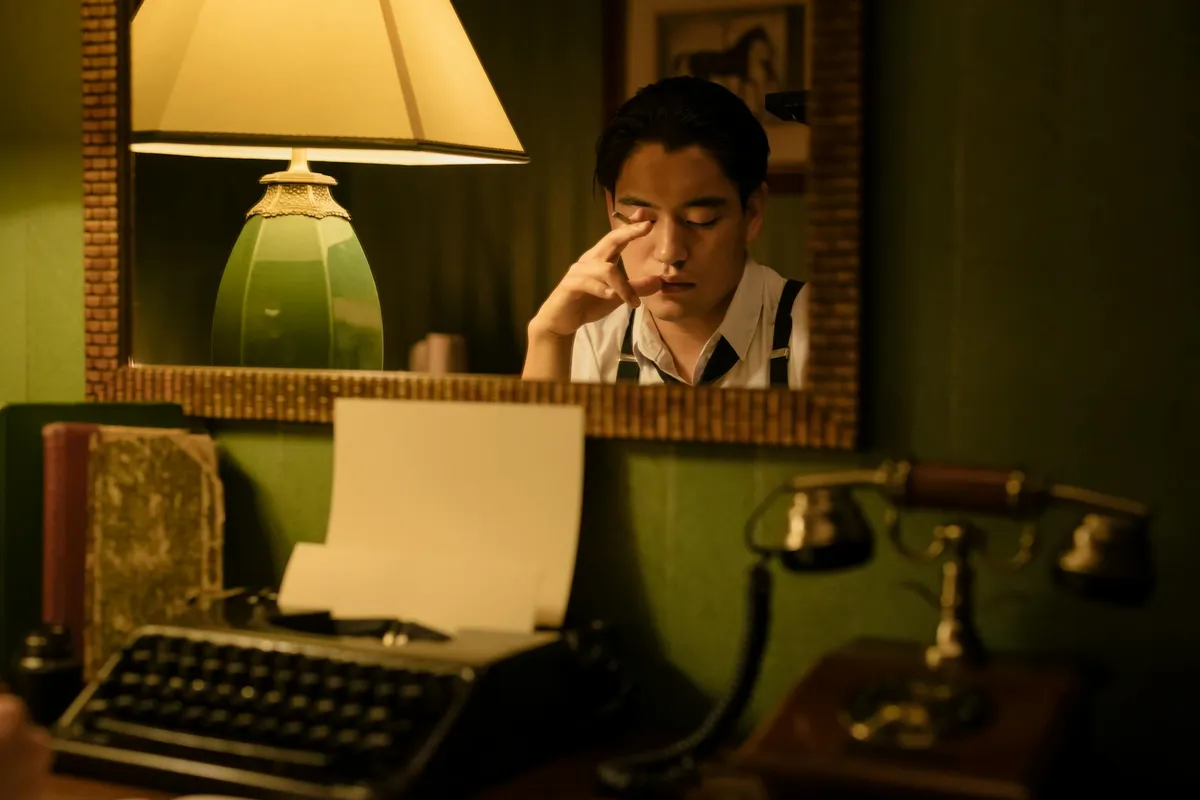
The mid-twentieth century saw a shift toward more documentary conventions for the author photograph. The writer was increasingly photographed in environments associated with the writing — at the desk, in the study, with books visible in the background — and the lighting moved toward more natural conditions. The shift was part of a broader change in portraiture conventions during the period, and it tracked the rise of documentary photography as a respected mode of professional photographic practice.
The documentary author photograph carried different assumptions about the writer's relation to the readership. The reader was now invited into a representation of the writer's working life — the scene of writing, the apparatus of literary work — rather than being offered a formal symbolic emblem. The intimacy was different in kind; the reader was being shown something more specific about the writer, and the specificity was part of what the photograph offered as a supplement to the book.
The mid-century photographs by figures like Jill Krementz, Diane Arbus (in her work with writers), and the staff photographers at the major publishing houses produced a body of author photographs that has come to constitute a small archive of literary portraiture. The Krementz photographs in particular, collected in The Writer's Image and in subsequent books, are now recognised as a genuine documentary achievement, with the photographs holding interest both as portraiture and as a record of the literary culture of their period.
The contemporary author photograph and what it does
The contemporary author photograph is, on the whole, a different genre from the documentary photograph that dominated the mid-twentieth century. The conventions have shifted toward a kind of self-conscious casualness that occupies its own specific cultural register. The writer is typically photographed in a setting that suggests informality without specifying it — outdoors, in a generic interior, in lighting that approximates natural light without being clearly documentary. The pose is informal; the gaze is often slightly averted from the camera; the composition tends toward the snapshot conventions of contemporary digital photography rather than toward the formal portraiture of the mid-century.
The conventions assume a different relation between the writer and the readership than either the early formal photographs or the mid-century documentary photographs. The contemporary author photograph projects accessibility — the writer as approachable, as not formally distinguished from the reader, as participating in the same casual visual register that the reader herself participates in on social media and in everyday photographic representation. The accessibility is itself an achievement of marketing, in the sense that it positions the writer as someone the reader might feel comfortable knowing, rather than as a figure of literary authority requiring the reader's deferential approach.
The contemporary author photograph is, importantly, often produced under conditions that the writers themselves do not fully control. The publishing apparatus has its preferences — about how the writer should appear, about which photographs are usable on dust jackets, about which presentations will work for the marketing channels the apparatus operates through. The writer's photograph is, in this sense, a constructed object with substantial input from the publisher, and the writer's participation in the construction may be more limited than the photograph's casual register suggests.
What the photographs tell us
What the photographs tell us, when read carefully, is several things at once. They tell us about the writer's self-presentation — what the writer is willing or able to project to the reader. They tell us about the publishing apparatus — what the apparatus prefers to project about its writers, what it considers marketable, what it suppresses. They tell us about the broader visual culture in which the photograph circulates — the conventions of contemporary portraiture that the photograph either follows or departs from. The photograph is an interpretively dense object, and the contemporary practice of glancing at it without attention misses what the photograph actually contains.
One can, with practice, develop a kind of secondary literacy for reading author photographs against their published books. The photograph that suppresses information about the writer's life — that, for example, photographs the writer in a setting that has no specific connection to the writing — is communicating something different from the photograph that places the writer in a documented environment. The photograph that adopts the casual conventions of the contemporary apparatus is doing different work from the photograph that occupies older portraiture conventions, even if the underlying writer might in either case have appeared in either kind of photograph. The reading is a small one, but it is a real one, and it can illuminate the situation of the writer's book in ways that the book itself cannot.
Some of the more interesting contemporary author photographs are produced by writers who have actively engaged with the photographic conventions and who have made specific decisions about how they will and will not appear. The writers who have used the same photograph across multiple books over many years are making a decision about the relation between their textual identity and their visual identity that is worth attending to. The writers who have refused author photographs, or who have used photographs that depart consciously from the conventions, are making different decisions that have their own implications. The decisions are part of the writer's broader engagement with the literary apparatus, and the photographs are one of the small places where that engagement becomes visible.
The disappeared photographs and what their absence implies
It is worth, finally, attending to a small phenomenon that has emerged in the contemporary period: the disappearance of the author photograph from certain kinds of publication. Several of the more interesting contemporary literary publishers — Fitzcarraldo Editions in the UK, NYRB Classics in some of its volumes, several of the smaller American presses — have moved toward minimal or absent author photographs on their books. The aesthetic choice is part of a broader visual identity for the press, but the choice also implies a specific position about the relation between the writer and the readership.
The position is, roughly, that the book itself is the encounter the reader is being offered, and that the photograph of the writer is a distraction from rather than a supplement to the encounter. The position has its merits; readers of the books published in this convention often report that the absence of the photograph allows them to engage with the writing more directly, without the visual frame that the photograph would otherwise impose. The position is, in this sense, a return to an older convention — the book as the writer's encounter with the reader, with the writer's person as separate from the encounter — that has been less available since the dust-jacket photograph became standard.
Whether the disappeared photograph constitutes a genuine improvement in the literary culture is an open question. The presses that have adopted the convention have produced books of consistently high quality; whether the convention is causally related to the quality is harder to say. What can be said is that the convention is a discernible feature of certain corners of the contemporary literary apparatus, and that its presence and its absence in different publishers is part of the variegated landscape that the contemporary reader navigates. The author photograph, like everything else in the literary apparatus, is a contested form, with different positions about its proper use producing different practices, and the practices producing different effects on the reading experience.
The reader who attends to all this — who reads the author photographs as carefully as she reads the books — has access to a kind of supplementary information about the contemporary literary scene that the casual reader does not. The information is not central to the literary experience, but it is real, and it forms part of the larger fabric of literary culture that the careful reader can usefully attend to. The author photograph is a small genre, but small genres can carry, when read attentively, more information than their size suggests.